

The New Mexico Wildlife Newsletter: April Edition
Clayton Lake: A Desert Lake Like No Other
By Dela Joyner
North Area Public Information Specialist

Just 12 miles northwest of the small border town of Clayton, New Mexico, sits a truly unique destination: Clayton Lake State Park and its renowned Dinosaur Trackway. Known for combining desert landscapes, exceptional fishing and a glimpse into prehistoric history, Clayton Lake has recently undergone significant ecological upgrades.
Over the past two years, the New Mexico Department of Wildlife completed a large-scale habitat enhancement project at Clayton Lake aimed at improving conditions for largemouth bass, channel catfish, flathead catfish and walleye. This winter, crews from the Department’s Fisheries Management Division installed large concrete structures known as reef balls. These are domed, Swiss cheese-like forms designed to create complex underwater habitats. These structures are intended to increase the natural reproduction of largemouth bass while also providing cover for other sportfish species.
In addition to reef balls, crews installed a variety of other habitat features, including catfish boxes, bass condos, submerged logs, and other complex structures. These features create refuge habitat for young bluegill, catfish, and largemouth bass, helping them avoid predators as they grow.
“We also stock 5-to-7-inch largemouth bass into Clayton Lake annually to bolster largemouth bass numbers, and the habitat structures should help those stocked fish survive as well,” said warmwater fisheries supervisor Edward Enriquez.
Spawning structures such as bass condos and catfish boxes provide the right conditions for adult catfish and largemouth bass to lay eggs and successfully raise their young. These structures also offer cover for male bass and catfish as they guard eggs and fry.
In total, 335 structures were placed throughout the lake “The catfish boxes provide spawning substrate for channel catfish and flathead catfish. Juvenile catfish and sunfish can also use the complex habitat structures,” Enriquez said. “The bass condos provide spawning substrate for adult bass, while the surrounding habitat offers refuge for juvenile largemouth bass. Fathead fortresses provide cover for forage fish such as sunfish, minnows, and shiners.”
This habitat enhancement is expected to further strengthen the fishery at Clayton Lake, which is designated as one of New Mexico’s trophy bass waters. These added structures will improve spawning success and provide protection from predators, helping build a more self‑sustaining bass population that relies less on annual stocking.
Beyond the ecological benefits, the new habitats also offer anglers clear targets to fish making for a more enjoyable and productive day on the water.
Clayton Lake is located in the far northeastern corner of the state near its borders with Texas and Oklahoma. It offers a rare desert bass-fishing destination with a prehistoric bonus: dinosaur tracks. Within the park, visitors can explore an archaeological site featuring well-preserved dinosaur footprints offering families a chance to explore ancient history alongside great fishing and camping.
For more information on this warmwater fishery and the species found at Clayton Lake, visit the New Mexico Department of Wildlife website and explore under the Fish tab.
For details on boating access, camping and park amenities, visit New Mexico State Parks.
Follow the dinosaur tracks to Clayton Lake State Park and discover a desert lake like no other.
Decades of work keeps Rio Grande cutthroat trout off Endangered Species List
By Bryan Ferguson
Rio Grande Cutthroat Trout Biologist

Decades of dedicated conservation work by the New Mexico Department of Wildlife and its partners have secured a bright future for the Rio Grande cutthroat trout (RGCT). This collaborative effort culminated in the U.S. Fish and Wildlife Service’s recent decision that the species does not warrant protection under the Endangered Species Act, affirming its long-term stability throughout its range.
The Rio Grande cutthroat trout, New Mexico’s state fish, is native to high-elevation streams in New Mexico and Colorado, including watersheds of the Canadian, Pecos and Rio Grande rivers. The species is threatened by competition and hybridization with nonnative trout, such as rainbow, brook and brown trout, as well as habitat loss, drought and the effects of wildfires.
Conservation efforts for the RGCT date back to the 1960s and 1970s. In 1989, the Department created a dedicated biologist position to focus on RGCT conservation. In 2003, the RGCT Conservation Team was established, bringing together federal and state agencies, tribes, municipalities, non-governmental organizations and private landowners. This collaborative group has worked tirelessly to protect and restore RGCT populations across the region.
The Department has led several recent projects to remove nonnative trout and reintroduce the RGCT into its native habitats. At the Seven Springs Hatchery, a broodstock program established by the Department produces thousands of RGCT annually. This source of fish is key to providing angler opportunities and creating new populations throughout New Mexico.
One of the most notable achievements is the Rio Costilla restoration project, which added more than 120 miles of stream, 16 lakes and a reservoir of protected RGCT habitat. This project also restored populations of the Rio Grande chub and sucker, which were similarly kept off the Endangered Species list. Additional restoration efforts have been completed on Middle Ponil Creek and Willow Creek, with new projects, such as Cow Creek in the Pecos watershed, currently under way.
To address the impacts of wildfires, the Department and its partners have salvaged RGCT populations from affected areas, relocating them to unoccupied streams or incorporating them into hatchery programs for future stocking. Following post-fire flooding, biologists evaluate stream conditions to identify opportunities for future restoration, ensuring the species will continue to thrive.
Hunter Ed grads enjoy chance to hunt with DOW officers
By Melissa Garnett
Southeast Area Public Information Specialist
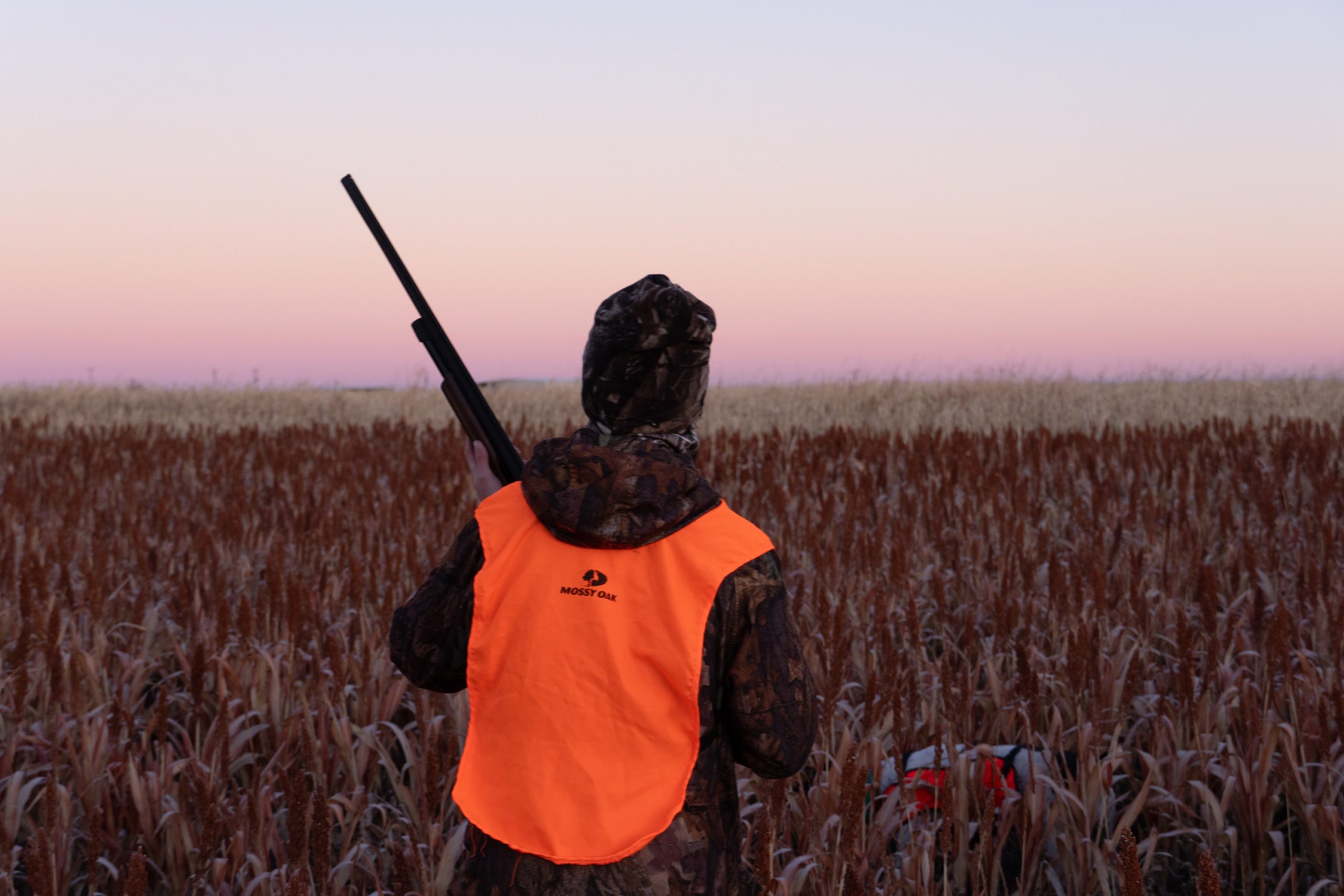
Conservation Officers in the Southeast Area organize a number of youth hunting opportunities for local recent graduates of Hunter Education each year. Most students are selected either because of high scores on the Hunter Ed test, or because they were unsuccessful in the draw following their graduation from the Hunter Education program. The goal is to continue the spirit of the Hunter Education philosophy of safe, responsible hunting, as well as for students to learn hands-on skills that will set them up for a lifetime.
Generous local landowners in need of depredation, work with officers to set up the hunt. Southern New Mexico Safari Club International donates gear the kids need to have success. The culmination of much coordinating and planning is a satisfying and memorable weekend for students and Department officers alike.
Here, hunters are learning to see the land through a new lens. Learning new techniques and mentorship during their hunt.
After all their dedication and preparation, the moment finally arrives. Guided by their mentors, they put their skills into action and harvest an animal.
The adventures, stories, and skills gained on these hunts will stay with them for life. It takes a generous community of experienced hunters willing to pass down their knowledge to make moments like these possible. Congratulations to Sebastian, Ananeesa, and Eli on their hunts!
Department, experts study threatened turtle species
By Darren Vaughan, Communications Director

The Rio Grande cooter is one of New Mexico’s 10 native turtle species, yet it has received relatively little scientific attention compared to many other North American turtles.
However, thanks to the efforts of New Mexico Department of Wildlife experts, in conjunction with experts from across the country, understanding of this state threatened species is improving. This summer, surveys will take place to better understand the status of the Rio Grande cooter in New Mexico.
“Like any native organism, turtles are intrinsic to their ecosystems as predators, prey, scavengers and other ecosystem services,” Department herpetologist Leland Pierce said. “Were this species to disappear, its absence would, over time, affect its native ecosystem as a whole.”
The Rio Grande cooter is native to the Rio Grande/Rio Bravo watershed in New Mexico and Texas and can also be found in several northern Mexican states. According to the United States Fish and Wildlife Service (USFWS), it was first described as a subspecies of the river cooter in 1952 based off a specimen from Coahuila. It was recognized as its own distinct species — receiving the scientific name Psedemys gorzugi — in 1990. It is currently listed as threatened under the New Mexico Wildlife Conservation Act and is considered an SGCN under the 2025 State Wildlife Action Plan for New Mexico.
In its December 2021 Species Status Assessment Report, which Pierce participated in on behalf of the Department, USFWS identified declining water quantity and degraded water quality as the most significant threats to the Rio Grande cooter. Human impacts on springs, streams, rivers and groundwater sources have altered or reduced available habitat, while climate change has further affected both surface‑ and groundwater availability.
The full report can be viewed on USFWS’ website.
The Department partnered with Dr. Ivana Mali, who spent seven years conducting intensive population surveys in the Black River in Eddy County . This river is home to the only robust Rio Grande cooter population in New Mexico.
The Rio Grande cooter faces numerous challenges beyond environmental pressures.
“Habitat loss is the primary concern, including water drawdowns, declining water levels due to drought and alterations to habitat structure,” Pierce said. “Pollution is also a concern for any aquatic organism. The species has been illegally collected in other states. Climate change could also affect the species.”
Much of the research has been supported by grants from the Department’s Share with Wildlife program. Dr. Mali and her research team have also studied the species’ reproductive timing, as well as its diet and distribution, providing valuable data for conservation planning.
Dr. Mali will return to New Mexico this summer to conduct additional studies, providing a five-year update on her 2021 work. Data gathered will help determine next steps for the continued protection of this species.
“This is very labor-intensive and requires a certain skill set that is not easily repeated,” Pierce said of the study. “The data will go to our population models and will inform us if we need to do things like assurance populations. A loss of that population would significantly impact the long-term resilience of the species in New Mexico.”
The Share with Wildlife program funds studies for species such as the Rio Grande cooter that do not receive funding from any other source. For more information about the program, visit the Share with Wildlife page on the Department’s website.
For more information about the Rio Grande cooter and other threatened or endangered species in New Mexico, visit the New Mexico Wildlife Species Information page.
Department officers stay busy in 2025
By Darren Vaughan
Communications Director
Infographic by Colleen Payne
Southwest Area Public Information Specialist
The New Mexico Department of Wildlife’s Conservation Officers play a vital role in helping to conserve the state’s wildlife resources for future generations, through patrolling the Land of Enchantment’s lands and waters, educating and assisting the public, enforcing laws and regulations and ensuring public safety.
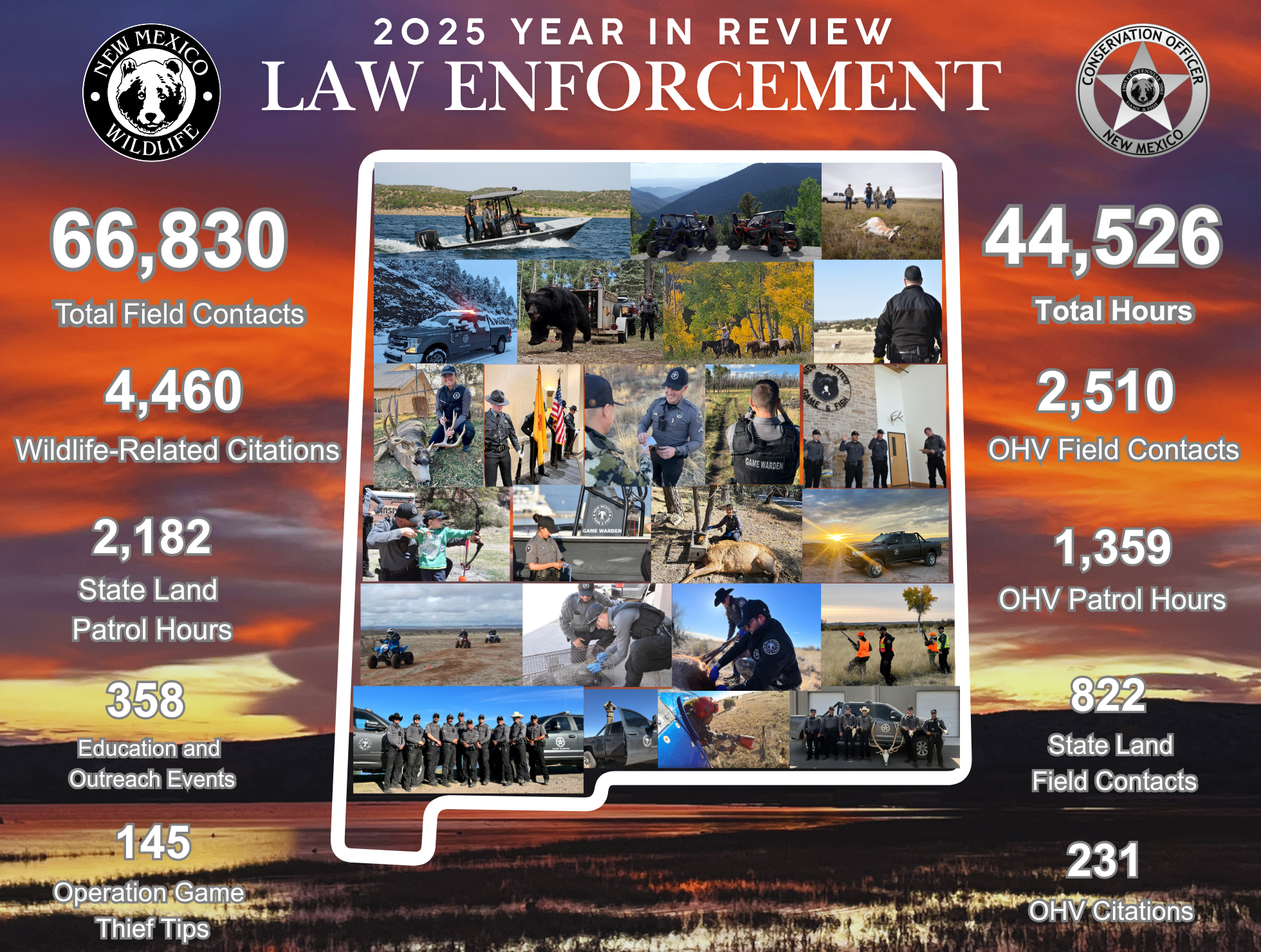
In 2025, those efforts resulted in officers contacting more than 66,830 individuals in the field.
“Many of these contacts resulted in license checks, conversations about what waters have recently been stocked with trout and wildlife trends,” Department Col. Tim Cimbal said. “Some of these contacts result in the need to ensure the laws are followed and that people are held responsible when they are not.”
Officers wrote more than 4,460 citations in 2025. Violations ranged from fishing without a license to more egregious offenses, including felony waste of game, with poachers stealing New Mexico’s wildlife — our wildlife. Department officers also devote patrol and compliance time to New Mexico state land leased by the Department for hunter and angler use, contacting more than 1,520 individuals in the field.
Off-highway vehicle (OHV) rules and regulations are enforced by the Department’s officers as well, with a focus on promoting safe and ethical operation of these vehicles. Officers spent more than 1,360 hours, contacting 2,510 OHV operators and issuing more than 230 citations in response to violations of New Mexico law.
Thanks to the public’s help, officers aren’t alone in helping to enforce these laws. The Department received more than 145 Operation Game Thief (OGT) tips from people like you. New Mexico’s OGT program, launched in 1972, was the first of its kind in the United States, and the other 49 states started their own program after seeing how successful the effort was here. Remember — if you have knowledge of a wildlife-related crime, speak up! Call the OGT hotline at 800-432-GAME (4263). Report. Remain anonymous. Receive a monetary award.
The Department’s officers are proud, active members of the communities in which they serve. Officers conducted 358 educational and outreach events across the state, including both rural areas and larger cities. Department officers, as well as public information and education staff, are also available for presentations and educational events across the state. You can contact our offices in Santa Fe, Albuquerque, Roswell, Las Cruces or Raton for more details.
Officers also assisted New Mexico citizens by responding to wildlife damage complaints, including broken fencing and elk feeding on haystacks meant for livestock. More than 370 such responses occurred to assist in alleviating damage caused by wildlife.
“New Mexico Conservation Officers are among the finest in the country,” Cimbal said. “They are the boots on the ground and authentically care for the state’s wildlife, natural resources and the safety of the public.
“I am proud to be part of such an excellent team of folks in such a unique and important profession.”
You, too, can join the Department’s team and take part in this very important work. If you are interested in joining the Department as a Conservation Officer, check out this YouTube video to learn all the steps you’ll need to take. The Department’s website also has information about this exciting job opportunity, with the next application period set to open in August.
Legal Disclaimer:
EIN Presswire provides this news content "as is" without warranty of any kind. We do not accept any responsibility or liability for the accuracy, content, images, videos, licenses, completeness, legality, or reliability of the information contained in this article. If you have any complaints or copyright issues related to this article, kindly contact the author above.
