

Mask Fit & Filter Quality Determine Real Protection as Wildfire Smoke Spreads Across Colorado, Utah and Florida
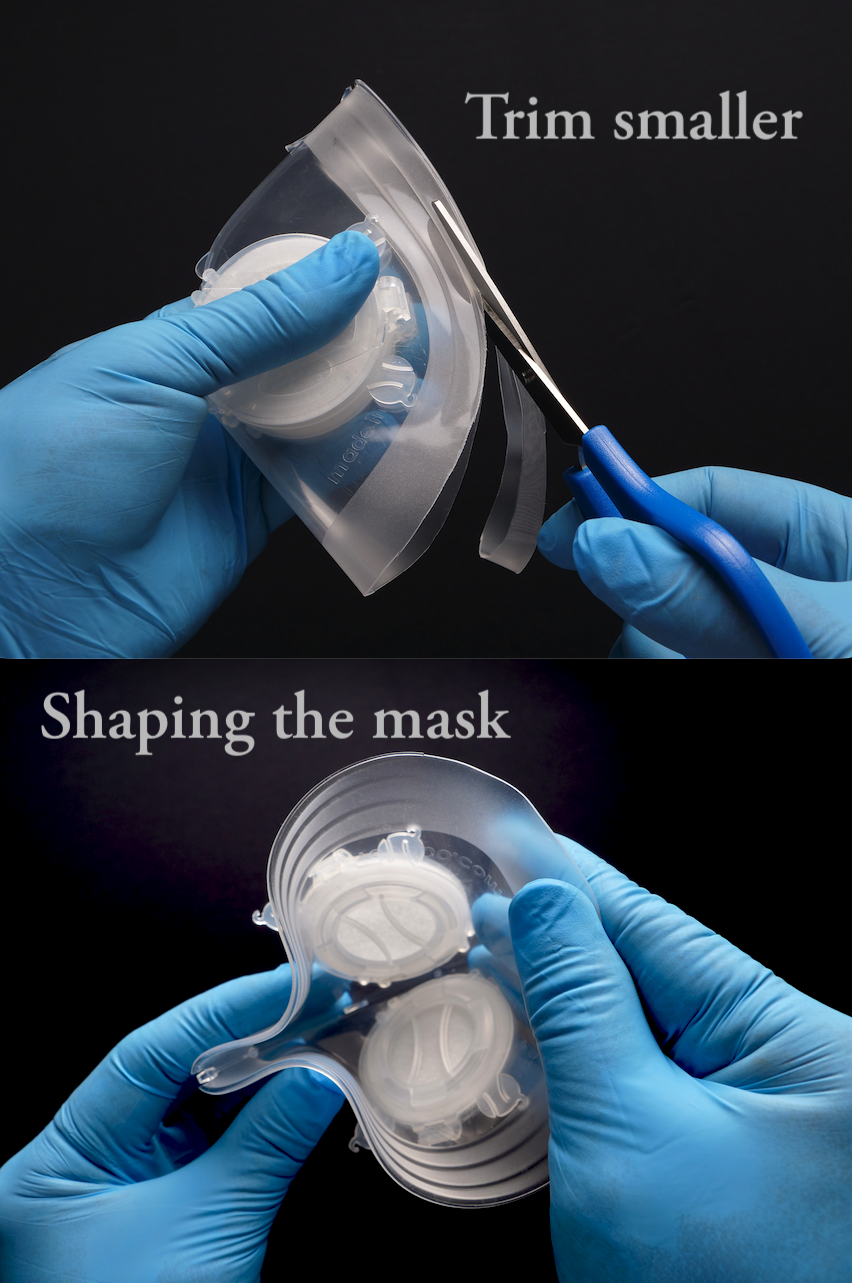
Totobobo's moldable design lets wearers trim and heat-shape the mask to their own face, rather than relying on a fixed size.
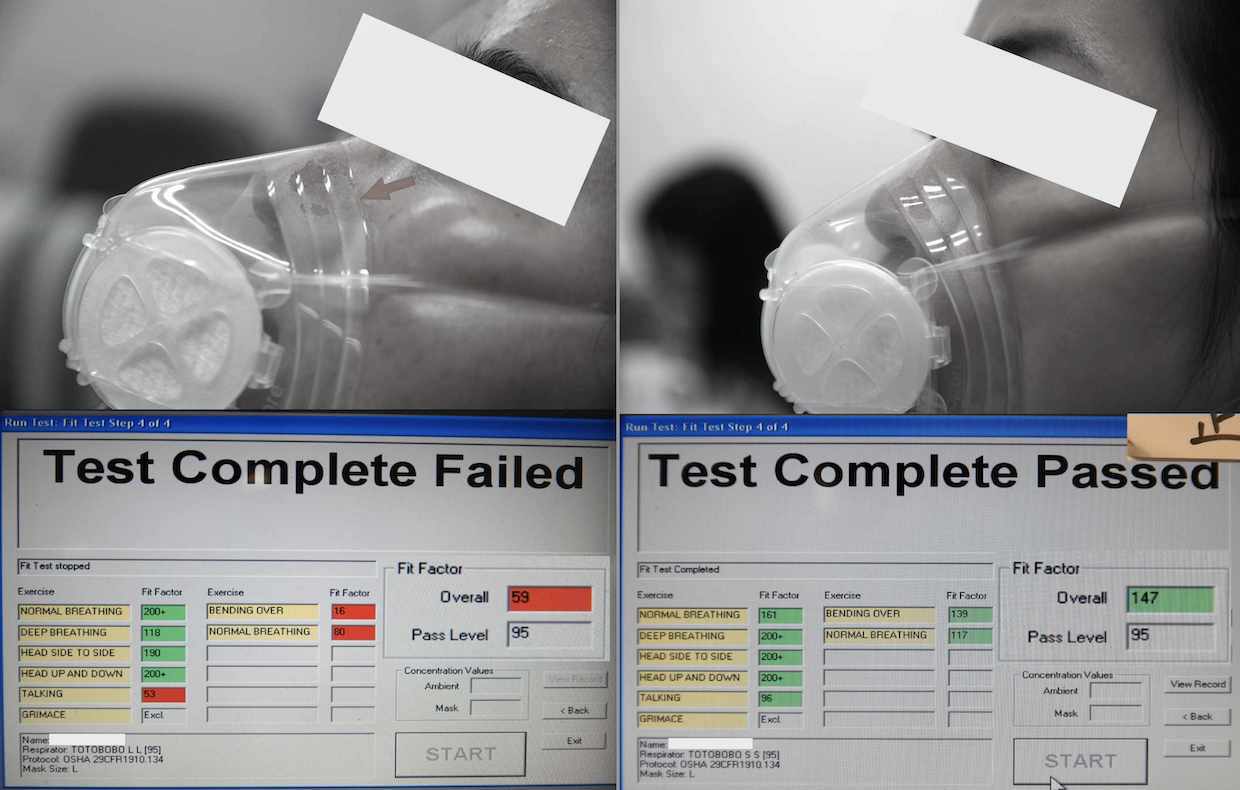
PortaCount quantitative fit test, Chinese University of Hong Kong/Prince of Wales Hospital: an unmolded mask failed at Fit Factor 59 (left); the same mask, properly molded, passed at Fit Factor 147 (right). Pass threshold: 95.
New research: 54% of adults fail N95 fit tests without knowing it, raising questions as wildfire smoke reaches Colorado, Utah New Mexico and Florida.
As households turn to masks for protection, peer-reviewed fit-testing research points to a factor that gets less attention than filter certification: whether a mask actually seals against the face — and whether wearers can tell if it doesn't.
In a study published in PLoS ONE, researchers at Tongji Medical College, Huazhong University of Science and Technology, quantitatively fit-tested 50 adults on 10 widely sold N95 models.¹ Only 7.8% of the 1,500 individual fit tests passed, and 27 of the 50 participants (54%) could not achieve a passing fit with any of the ten models. The gap between perceived and actual fit was just as stark: in 219 of 500 wearer-respirator combinations, participants believed the mask wasn't leaking, but only 24 of those (4.8%) actually passed the objective fit test.
Separate research has examined how Totobobo's reusable, moldable mask compares. A 2017 study retested 22 healthcare workers a median of four years after their original N95 fit test; only 9 (41%) still passed, while a Totobobo mask fitted in the same session passed for 10 of 22 (45%).² A 2010 trial found comparable pass rates for freshly fit-tested N95s (19 of 22, 86%) and Totobobo masks (16 of 22, 73%), though N95s showed significantly higher median filtration reduction.³
"As a parent, the question I couldn't answer was simple: how do you know a mask is actually working, rather than just sitting on a child's face?" said Francis Chu, product designer and founder of Totobobo. "Research keeps finding that people can't reliably feel whether a mask is leaking. With smoke reaching Colorado, Utah, New Mexico and Florida this summer, that's the gap we designed Totobobo to close — a moldable, transparent mask so people can see the seal instead of guessing."
Research findings relevant to fit and filtration:
Half of adults tested could not get a passing seal with any of 10 common N95 models, and self-reported fit rarely matched objective results.¹
Fit can decline over time, even after professional fit-testing — pass rates fell the longer it had been since a wearer's last fit test.²
A moldable design let wearers improve their own fit. In a 2022 study, 45% of 49 participants passed a quantitative fit test on their first attempt with a Totobobo mask; after using its visible-seal molding process to adjust and refit, pass rates rose to 77%, holding up over repeated cleaning cycles.⁴
Totobobo's F96 filter material was independently tested by Nelson Laboratories, an accredited lab commissioned by the company, which measured 99.86% particle capture at 0.1 microns — smaller than the sub-2.5-micron particles typical of wildfire smoke.⁵ Filter efficiency measures the material only; it doesn't indicate how well a given mask seals to an individual's face.
The company designs its moldable format, in part, to fit face shapes that standard fixed-size respirators may not, including children's. The full review of the underlying research, "Why a Mask's Fit Is the True Measure of Protection," is available at https://totobobo.com/why-respirator-fit-matters-independent-research-behind-totobobo/.
Totobobo masks are not NIOSH-certified respirators and are not marketed as a substitute for certified respiratory protection in occupational or high-hazard settings. The company recommends that people with underlying health conditions consult a physician about respiratory protection during wildfire smoke events.
About Totobobo Founded by product designer Francis Chu, Totobobo makes reusable, custom-moldable, transparent masks designed to let wearers see and adjust their own face seal. The company's masks are used by commuters, cyclists and families managing everyday and wildfire-related air pollution.
References
Yu Y, Jiang L, Zhuang Z, Liu Y, Wang X, Liu J, Yang M, Chen W. Fitting Characteristics of N95 Filtering-Facepiece Respirators Used Widely in China. PLoS ONE. 2014;9(1):e85299. doi:10.1371/journal.pone.0085299.
Hui CYT, Leung CCH, Gomersall CD. Performance of a Novel Non–Fit-Tested HEPA Filtering Face Mask. Infect Control Hosp Epidemiol. 2017;38(10):1260-1261.
Au SSW, Gomersall CD, Leung P, Li PTY. A randomised controlled pilot study to compare filtration factor of a novel non-fit-tested HEPA filtering facemask with a fit-tested N95 mask. J Hosp Infect. 2010;76(1):23-25.
Li KHK, Yeung DCM, Ling L. The effect of ethanol immersion on fit performance and comfort of a fit-tested reusable mask. J Ind Text. 2022;52:1-11. doi:10.1177/15280837221123061.
Nelson Laboratories. Particle Filtration Efficiency Test Report, Totobobo F96 filter material, Lab No. 760989. Commissioned by Dream Lab One Pte Ltd, June 2014.
Francis Chu
Dream Lab One Pte. Ltd.
francis@totobobo.com
Visit us on social media:
Facebook
Legal Disclaimer:
EIN Presswire provides this news content "as is" without warranty of any kind. We do not accept any responsibility or liability for the accuracy, content, images, videos, licenses, completeness, legality, or reliability of the information contained in this article. If you have any complaints or copyright issues related to this article, kindly contact the author above.
